BHOSARI MIDC · PUNE · INDIA
Home/Shaft Types/Textile Machinery Shafts
Process Machinery · TECHNICAL PRODUCT PAGE

TEXTILE MACHINERY SHAFTS

Textile shafts need consistent rotational geometry to support long-running equipment and compact bearing assemblies.

DRAWING-BASED ENGINEERING

BUILT AROUND
YOUR ASSEMBLY.

Textile shafts need consistent rotational geometry to support long-running equipment and compact bearing assemblies.

For textile machinery shafts, machining starts by identifying functional surfaces, mating components and the datums that matter at assembly. We review the drawing for tolerances, appropriate manufacturing sequence, material availability and any inspection or finishing obligations before committing a quotation.

Engineering note

All grade, fit, finish and process selections below are technical review points—not a universal dimension, tolerance guarantee or statement that each operation is performed in-house. Final supply depends on RFQ, drawing approval and confirmed capability.

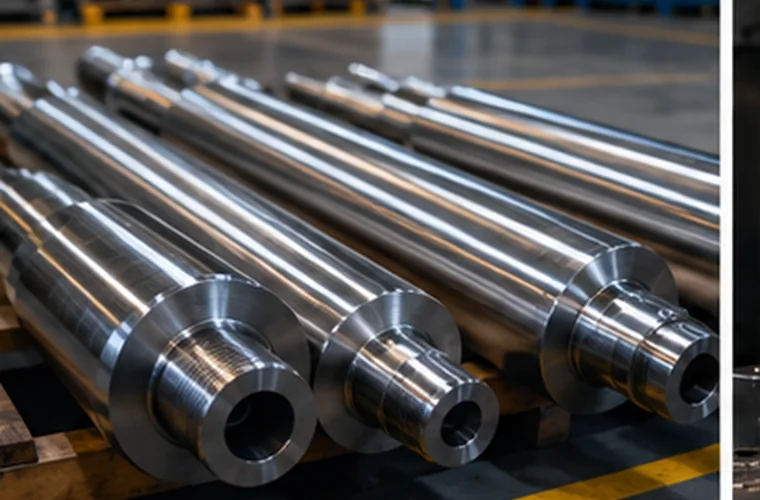
Representative industrial component visual for Textile Machinery Shafts
Representative visual — not a photograph of an RMI-completed order
PRODUCT ENGINEERING DATA

CORE TECHNICAL
CONSIDERATIONS.

Technical review checklist for Textile Machinery Shafts
Suitable materials / grade reviewEN8, EN19, stainless grades or specified alloy
Critical features / drawing geometrySmall journal steps, pulley seats, timing features and threads
Manufacturing routePrecision turning, slotting, grinding
Inspection and metrologyJournal size, runout, finish and repeatability across batches
Wear / failure considerationsSmall fits and burrs can cause assembly delays
Heat treatment / surface finishGrinding or protective treatment per drawing
MACHINING & INSPECTION

WHAT GETS CHECKED
BEFORE DISPATCH?

01 / DATUMS & FITS

Define the functional reference

Confirm the mating location, functional datum, fits and axial stack. Journal tolerances such as h6 or g6 are only examples of designations under ISO 286; actual size limits require the nominal diameter and the drawing.

02 / SEQUENCE

Plan the critical operations

Precision turning, slotting, grinding. Heat treatment, coating or grinding sequence must account for distortion and finishing allowance, where specified.

03 / INSPECTION

Check the right characteristics

Journal size, runout, finish and repeatability across batches. Reports, gauge method and sampling plan are agreed according to the job; do not assume every drawing has the same inspection scope.

DRAWING-BASED INDUSTRIAL COMPONENTS

HAVE A DRAWING?
LET'S REVIEW IT.

SEND AN RFQ ↗
✆ WhatsApp RFQ